
A Lot of Filipina Founders are Ates.
I don't think that's a coincidence.

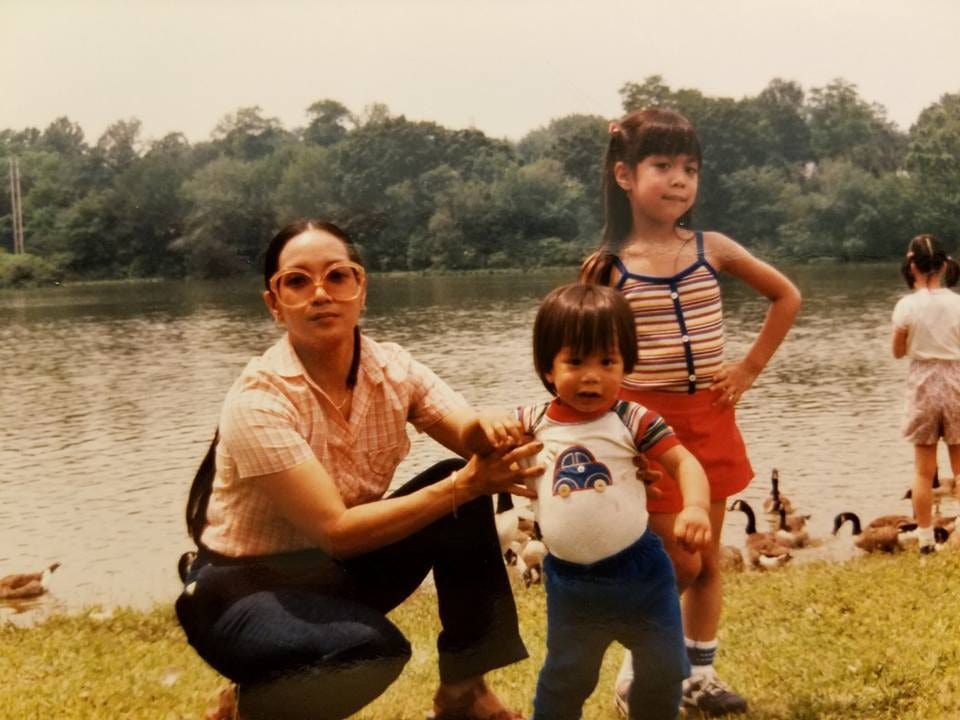
If you spend enough time around Filipino-owned businesses in America, a pattern starts to emerge. A lot of them are led by Filipinas, and a lot of those women share a similar origin story: they are ates, or eldest daughters. Growing up, they were the helpers, the translators, the emotional buffers, and the unofficial third parent.
I don’t have any data to prove any of this. But when you spend enough time talking to Filipino founders, operators, community builders, creative directors, agency owners, food entrepreneurs, and people building things from scratch, you start to notice something that they’re mostly women. They’re hyper-competent. They can juggle multiple things at once. They have a near-psychic ability to anticipate problems before they happen. They over-index on emotional intelligence, control, and stamina.
I would know. I’m an ate.
I’ve been thinking of that pattern as the Ate Effect. The Ate Effect is what happens when eldest-daughter conditioning becomes leadership. The girl who learned how to keep the family running grows up to become the woman who can run a team, a company, or a whole community through sheer force of will.
The skill set of an ate in an immigrant family overlaps a lot with the skill set of a startup founder. As the eldest, you learn quickly how to anticipate needs. You learn how to read a room, track dynamics, diffuse conflict, adapt to new information, and get people back on course. You become fluent in logistics. You over-index on EQ. You become indispensable.
For many Filipino American daughters, that usefulness went far beyond ordinary household responsibility. Many of us were helping our parents navigate American life while we were still learning how to navigate it ourselves. We translated forms, school systems, cultural codes, social expectations, and bureaucratic processes. We explained how things worked. We stood at the border between home and the outside world and learned, very early, how to move between them.
That kind of upbringing builds real leadership capability. It produces women who are observant, adaptable, resilient, and often very good under pressure.
But there’s a cost.
Growing up, many of us were praised for being responsible and mature. We became so effective, competent, and good at carrying things that we never learned how to trust other people enough to delegate.
Today, asking for help is something we are teaching ourselves because it’s hard to let go of feeling responsible for everyone. We still have a hard time letting go of the twelve-year-old inside, measuring our worth by how much we can carry.
So when I look around and see Filipina founders building businesses, I do not just see hustle or vision or discipline. I see women who were taught, explicitly or not, that when something needed doing, they should be the one to do it. That training builds extraordinary leaders.
It also builds women who are exhausted by their own competence.
For Women’s History Month, call your Ate. Then go support a Filipina founder. The point is not just to admire what women make possible. It’s to make sure they’re supported while they’re doing it.
PS: If you want to support one directly, all Dear Flor gummies are 30% off right now.
Ooohhh this resonates so hard #PastorAte